

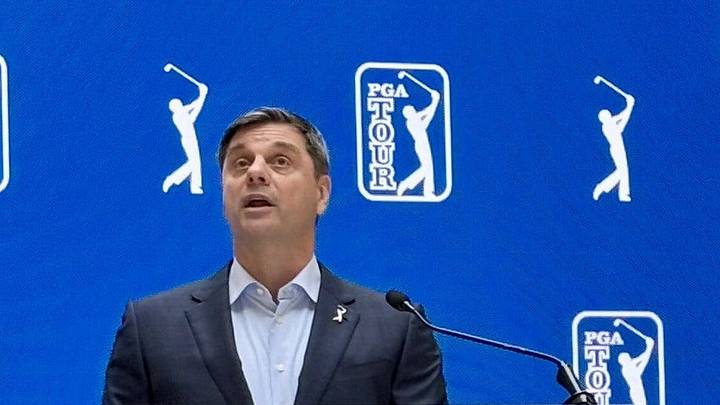
PGA Tour CEO Brian Rolapp addressed members of the media at the Tour Championship and provided a wide-ranging report that touched on the successes of the 2026 season and the upcoming changes to the Tour schedule.
Rolapp’s most often-used answer to questions from on-site media was a variation of “We haven't determined that. We're working through that.” And it’s only fair, as they are looking far into the future and at the same time making changes to the upcoming competitive landscape.
The plan for the new way the PGA Tour operates starting in 2028 has two levels of play in the Championship Series with the top players and the Challenger Series for those who do not qualify for the Championship Series. There will be a way for those in the Challenger framework to move up. Championship events will have $20 million purses. Challenger events are expected to have $4 million purses.
The initial goal was to have 15 Championship events for 2028, and amazingly, the Tour is well on its way to reaching that mark.
“We have announced seven of the 15 regular-season events on the 2028 PGA Tour Championship Series,” Rolapp said about their progress. “An additional four have been identified, and we will be announcing those in the coming weeks, bringing us to 11.”
He added that for the remaining four events, they are currently talking with 14 possible sponsors.
“Given that level of demand and interest, we expect to be making final decisions soon,” he added. He called it a high-class problem to have.
In addition, the Tour is having a large number of queries on the Challenger Series.
“We've had unsolicited inbound interest in the Challenger Series,” he explained. “But I think from a tactical standpoint, it's important for us to secure the Championship Series and then move on, which we're doing now.”
With the continued rise in purses, it had become difficult for some long-time golf sponsors to stay in the mix. Having another level may generate more calls than they anticipated or even bring former sponsors back.
“I'll keep our conversations quiet, but I do believe with our new model, from a commercial standpoint, from a sponsor standpoint, we have a price point, and we have an opportunity for sponsors at all levels at what makes sense for their own marketing goals and sponsorship goals,” he explained. “I think that was one of the reasons behind the model, and we feel pretty good about how the market is reacting.”
They have not gotten so far as to determine what company might back a year-long points program, such as the FedEx series, but they are keeping options open.
“I think there is a demand, an interest for more national sponsorship outside of just the tournament model,” he noted. “We're seeing that already. As to how we will deal with the season list, we're not certain yet, but I think there's interest in that.”
East Lake Golf Club remains a consideration for the Tour Championship event in the future. They have already had conversations with them about it.
“Wherever the competitive format in the Championship Series ends up, we are going to continue our support of East Lake Foundation. So I think -- I'm hoping that with our new model, we are able to do it better and more impactful,” he added.
Regarding who will play in the 15 events, Rolapp said in terms of top events that they are first of all focused on the competition.
“We, theoretically, could do a tournament every weekend in the summer. But the reality is to have the level of competition we want, not every professional golfer is going to play every week,” he said. “That's a lot to do, especially as we've condensed the schedule.”
Speaking of the fall events, there will continue to be six to eight, and that is not determined at this juncture. Some of it will be determined by the relationship with the DP World Tour.
Possibly the most interesting comment was on the Strategic Sports Group money, the $1.5 billion investment that they have not yet put to work. The Tour is focusing first on getting the main PGA Tour competitions right
“Once you get the competitive model right, you have a good idea of where you're playing, what those tournaments will be, what are we going to own or not own, and then I think we can put the capital to work in service of that ambition,” Rolapp said.
The keywords slipped into the previous sentence were "own or not own." The important thing to remember in all the schedule and purse changes is that the PGA Tour, while a charity-dollar-raising machine, does not own the tournaments in which its players participate. What it owns right now on the PGA Tour are the Players Championship, the Tour Championship and the Presidents Cup. Expect more Tour-owned events to surface in the months and years ahead because, in the current media landscape, sponsors want sports.
 Add us as a preferred source on Google