

PGA Tour players were recently surveyed for their opinions on the proposed distance reduction for golf balls. Do you want to hit it shorter? Didn’t think so. It’s likely that pros don’t want that either. But will longer and longer shots render great courses obsolete?
While we’ll have to wait until there’s a leak in the results on the “distance issue,” at least the players are being consulted. As owners, they should be.
What’s important for this open-book, take-home test is that nobody has to sign their name to it, so at least the Tour will get honest answers.
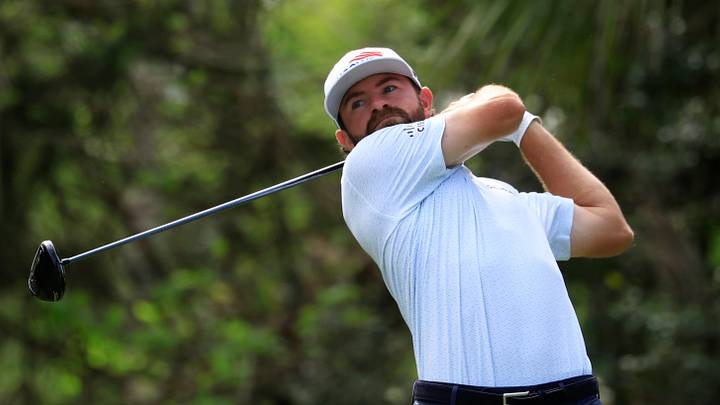
One recent tournament is significant when it comes to the distance debate, that being the 2026 Players, where Cameron Young was reportedly playing a distance-reduced ball. On the 18th hole of the final round, he hit a drive of what Shotlink said was 375 yards. At sea level. That’s longer than Rory McIlroy’s drive on 18 a few years ago, when he hit it 357 yards. And McIlroy’s ball was not distance-reduced.
The announcers were gobsmacked when they saw how far Young's ball went.
According to Golf Digest, which no doubt got its information from the PGA Tour, Young’s drive apparently traveled 330 yards in the air and then had 45 yards of roll. The next longest drive ever on that hole was Davis Thompson’s in 2023, which went 361 yards. Sean O’Hair belted a drive 360 yards in 2016, and Rory McIlroy’s best was the aforementioned 357-yarder in 2025.
The survey covered some other questions, too. They were not all about distance. Here’s a sample:
What skill should be tested more when it comes to playing professional golf? Should it be skills like shaping shots and scrambling? Should it be long irons? Driving accuracy? Putting skill? Driving distance?
They asked players if “driving distance” is a “problem?” You have to imagine that shorter hitters might say yes if they can’t hit it as far as long hitters, but we may be surprised when the answers are returned.
The Tour asked what players thought affected distance the most in the last decade. Was it drivers and balls or agronomy or players working out and getting stronger? And the Tour wanted to know which aspect of the game, from equipment to courses, should be the focus to fix the issue, if a fix is the way to go. Maybe it shouldn’t be fixed.
One choice that was offered was to make the driver harder to hit. Another was changing the distance a driver can hit the ball. Presumably, they are talking smaller clubheads, but that wasn’t specified.
And here’s one that is sure to rankle the powers that be in the rules and regulations department: The Tour asked if the R&A and USGA’s rules-making was effective when it came to professional golf.
The biggest question from a diplomatic standpoint was should the PGA Tour make its own rules for play. If the answer to that is yes, it could open another Pandora’s box in golf.
One surprising question was whether players personally experienced greater distance with the reduced-distance ball, and, if so, by how much. Some players may have experienced no change with new balls. The Tour wants to know.
Separately, the Tour asked if players think the change in testing conditions will result in the longest hitters losing 13-15 yards and the rest losing nine to 11 yards.
The only answer to that is: Cameron Young, 2026 Players, 18th hole, final round, 375.
Players were asked if they had tested any distance-reduced balls. And then the Tour wanted players to make a judgment call on whether the new balls would have a disproportionate impact on some players, based on their swings.
But the biggest, baddest question was should the PGA Tour follow the ball change called for by the USGA and the R&A. Make your own volcano erupting noise.
Now, summing up, there’s nothing wrong with hitting the golf ball 375 yards. It’s a distinct advantage for the player who is able to do it.
It’s really a golfer’s business what club he or she hits off the tee. That’s just the first shot hit on a hole. There are plenty of opportunities to mess up in other places, and most of us have.
Why care? What excessive length does is obsolete courses. Places where professional golfers have played tournaments in the past are just becoming too short to challenge today’s players. Indian Wells CC in Indian Wells, California, used to be a part of the Amex. It was outdated decades ago by shortness. Same with a couple other clubs in that area.
Back in the day of Arnold Palmer and Jack Nicklaus, PGA Tour courses used to be considered monster long if they were over 6,500 yards. Today, the shortest course on the PGA Tour is Port Royal, 6,828 yards, par-71, used for the Butterfield Bermuda Championship. It’s followed by TPC River Highlands, 6,844 yards, par-70, and Pebble Beach Golf Links, 6,972 yards, par-72. Harbour Town Golf Links is listed with a variety of yardages that are just under or just over 7,000 yards.
Pebble Beach has a problem adding any length unless they buy up houses and/or tear down the Lodge at Pebble Beach, neither of which are likely to happen. Unless God miraculously adds more land, they are trapped in their beautiful environment. It would be a shame if Pebble was deemed too short for the PGA Tour to play. Same with Harbour Town.
Think about The Masters and Augusta National. They are a rich club. But even they have been nearly obsoleted by the distance balls are hit. Since the early days of Tiger Woods’ career, they have been furiously buying up property around their location so that they can add length to the holes on their treasured landscape. (As well as high-end hospitality!) They have to do that or else change it to a par 68, and that’s not “a tradition” that’s likely to happen.
New golf properties, the ones that can build 8000 yard and up courses, may be the PGA Tour sites of the future. We know what has happened to the sites of the past. Deemed too short, they are no longer played for professional tournaments.
 Add us as a preferred source on Google