

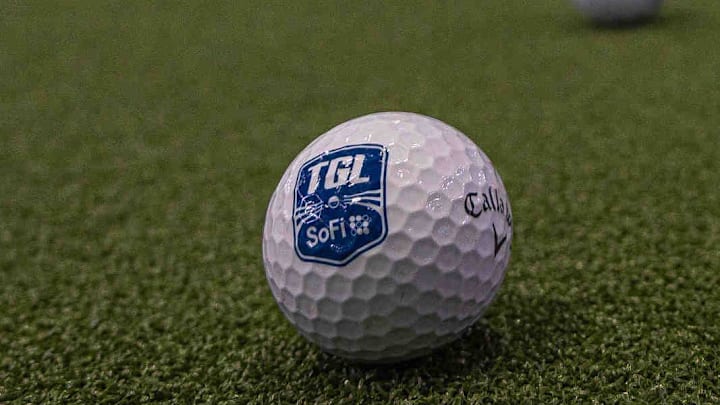
Back in January, Rory McIlroy and Tiger Woods launched a new golf league that captivated fans across the world. Tomorrow’s Golf League (TGL) was met with massive curiosity and hype, largely because of the star power involved, innovative technology, and primetime television slots.
Now, season two is set to kick off on December 28 with a matchup between Atlanta Drive Golf Club and New York Golf Club at 3:00 p.m. Eastern on ABC. Fans will be excited to see their favorite players back in action in a competitive setting, but what will truly be interesting is how TGL has evolved since last year.
While season one was successful, the league now needs to prove it can be a sustainable product for golf fans moving forward.
What worked for TGL Season 1
Season one of TGL offered something for every type of golf fan.
For more hardcore fans, the league provided a deeper look into the strategy and decision-making behind professional golf. At times, TGL featured live, mic’d-up conversations between players, offering rare insight into how and why certain shots were chosen, which is something you don’t often hear during a traditional PGA Tour broadcast.
Additionally, the technology-driven format allowed fans to analyze swings in detail. From swing speed and launch angle to spin rates, TGL delivered the type of data that golf nerds love.
For casual fans, TGL leaned heavily on household names like Rory McIlroy and Tiger Woods, the two players who helped create the league. The faster pace of play was another key factor, especially for viewers who typically find golf slow or unexciting.
Perhaps the biggest draw for casual fans was the primetime scheduling. Most viewers can’t commit to watching a full tournament that begins early on a Thursday morning, making TGL’s time slots far more accessible.
How Season 1 could have been better
Naturally, as with any new product, TGL faced some criticism.
One common complaint was the lack of variety in gameplay. Many holes felt repetitive and often finished at the same green complex, creating a somewhat cookie-cutter short-game viewing experience.
Some fans were also confused about the stakes. While TGL is a competitive league, many early matches were lopsided, and players often appeared nonchalant about winning or losing.
Broadcast and production quality also drew criticism. Fans wanted deeper shot analysis but were instead met with surface-level banter and, at times, distracting music. This kind of presentation can quickly turn viewers away.
How TGL plans to respond
Fans will be happy to know that TGL has listened to feedback and is making meaningful changes for season two.
One major adjustment involves gameplay tweaks, including updates to greens and overall course design. Recently, fans reacted on social media to a new hole design featuring a serene setting and a dramatic island green. If TGL continues producing creative designs like this, viewers will be in for a treat as they watch professionals navigate seemingly impossible scenarios.
TGL has also updated the GreenZone, the main putting and short-game surface, by increasing its size by 38 percent. This change creates a more realistic playing environment and adds strategic depth. Additionally, the number of pin positions has increased from seven to 12, and bunkers have been reworked to be larger and more challenging, with higher lips.
From a broadcast perspective, season two will air on ABC alongside ESPN platforms, which should help create a smoother and more polished viewing experience. Core announcers Matt Barrie, Scott Van Pelt, and Marty Smith will return, and fans will hope the broadcast leans more into golf analysis and storytelling based on feedback from last season.
Finally, TGL is introducing a more clearly defined competitive structure. Season two will feature 15 regular-season matches, followed by playoffs that culminate in a best-of-three finals series. This format should eliminate any doubt about how much winning truly matters.
Season 2 is the real test
Season one of TGL succeeded largely because of its novelty. A modern, fast-paced golf league was enough to draw curiosity and initial viewership.
Now, season two must prove that TGL can retain fans. If the league establishes a clearer identity and improves the overall viewing experience, it has the potential to stick around. It doesn’t need to replace traditional golf, but if season two delivers, it can carve out a permanent lane of its own.
 Add us as a preferred source on Google